An Airbnb guest looked closely at two photos of the same coffee table, both submitted by her host. The cracks across the top, she said, were similar in both pictures but not quite identical. That disputed mismatch sat at the center of an Airbnb damage claim that the company later reversed. Since then, Airbnb's damage terms have said in writing that a host's evidence has to be something Airbnb can verify.
The case was first reported by Guardian Money in August 2025 and picked up by PetaPixel and Fox Business. A London-based guest booked a one-bedroom apartment in Manhattan for about two and a half months and left after roughly seven weeks, citing safety concerns about the area. After she left, the host told Airbnb she had caused more than $16,000 in damage, including a cracked coffee table, a stained mattress, and several appliances. She denied it and said she had only two visitors during her stay. Airbnb at first told her she owed more than $7,000. She appealed and offered testimony from an eyewitness who had been with her at checkout.
Her case rested on those two table photos. "These inconsistencies are simply not possible in genuine, unedited photographs of the same object," she said, and she believed the images had been altered, possibly with AI. That was her account, and none of the reports we reviewed included the host's side. After Guardian Money began asking Airbnb questions, the company accepted her appeal and eventually refunded the full cost of her booking. According to reporting on the case, Airbnb told the host it could not verify the images he had submitted. Airbnb told Fox Business: "We have been in touch with the guest to apologize and assure them that they will not be charged for the reported damage. We have taken action with the host, and we are reviewing the original handling of this case."
What Airbnb's Host Damage Protection Terms say about doctored or AI evidence
Section 3.3.3 of Airbnb's Host Damage Protection Terms bans evidence that is doctored or falsified in any way, including with artificial intelligence. These terms are the rulebook for the part of AirCover for Hosts that reimburses hosts for guest-caused damage. The updated version applied to new users from February 5, 2026, and generally took effect for existing users on April 20, 2026. Airbnb has not said the new language was written because of the Manhattan case, and the public record shows only that the story came first.
Here is the definition in full:
"'Legitimate and Verifiable Evidence' means, but is not limited to, that the documents and information you provide must be true and accurate and not be doctored or falsified in any way, including by the use of artificial intelligence."
In plain terms, your photos, receipts, and documents have to be true, and nothing may be faked or altered, whether by hand or with AI. The terms do not mention cropping or brightening a photo.
For an honest host, the next sentence in that section matters more than the ban. If Airbnb "cannot verify the documents and information that you provide as being legitimate, after using reasonable efforts to do so," it has three options. It can ask for more documentation, possibly from an independent third party. It can ask you to capture the evidence in a different format or by a different method. Or it can deny the request. So your files have to speak for themselves. The terms never tell you to keep untouched original files, but that is the plain way to meet this clause.
Deliberate deception is handled much more harshly than evidence Airbnb simply could not verify. Under the same terms, any misrepresentation, fraud, or dishonest act leads to denial of every pending payment request and the end of that host's Host Damage Protection. Where fraud is identified, Airbnb will also recover money it already paid out, including from future payouts, and pass details to fraud prevention and law enforcement agencies.
Airbnb damage claim deadlines: 14 days and 30 days after checkout
None of this helps if the claim has already expired. Two deadlines in the terms decide that, and both count from the guest's checkout.
| When | What you do | Source |
|---|---|---|
| Day 0 | The guest checks out. Both deadlines in the terms count from this date. | Host Damage Protection Terms §3.1, §3.3 |
| Within 14 days | Ask the guest to pay through a reimbursement request in the Resolution Center, and explain why they are responsible. This also notifies Airbnb. The guest has 24 hours to respond. | Terms §3.1.2, §3.1.3; Airbnb Help Center |
| Within 30 days | If the guest doesn't respond, pays only part, or refuses, file the Host Damage Protection Payment Request Form in the Resolution Center with your full evidence. | Terms §3.2, §3.3 |
Attach your photos, receipts, and other documentation to the first request, not the second. Airbnb's help page says that if you want Airbnb Support involved, you need to submit the supporting documentation within 14 days of the damage or loss. Treat day 30 as the last day to file the form, and have your proof gathered long before it.
Airbnb's current documentation does not tie either deadline to the next guest's check-in. Still, document the damage before the next guest arrives. Once someone else has stayed in the room, it gets much harder to show which guest caused what. This is our advice; Airbnb's terms don't require it.
What evidence an Airbnb damage claim needs
Sections 3.3.2 and 3.4 of the terms list what a complete claim needs.
- Photos, videos, receipts, and other proof that show when the damage happened, what caused it, and where it came from.
- A complete inventory of each damaged or lost item, with the make and model, the date you bought it, its condition before the damage, and the estimated cost to repair or replace it, backed by receipts or records for those figures.
- Detailed repair estimates for physical damage to the property itself.
- Proof that you owned the item: receipts, photos, videos, or other documents you certify as true and correct.
- A police report, if the loss involved theft or another crime.
- For smoke odor claims, evidence that the guest or their visitors caused the smell, such as photographs, a professional assessment, smoke detector readings, or the guest admitting they allowed smoking against the house rules. Airbnb can also require the cleaning receipt to come from an independent third party it approves.
- The damaged item itself, kept and protected rather than thrown out, since Airbnb can ask to see what remains.
Two limits are worth knowing before you file. Everyday supplies that guests are expected to use up (toiletries, paper products, lightbulbs, disposable batteries, coffee, tea, sugar, milk, cleaning supplies) are excluded, except items a host clearly marked as unavailable to guests. And an extra cleaning claim only pays the amount above the cleaning fee you charged. For the wider gaps in this coverage, see what AirCover doesn't cover. If the dispute is already getting tense, our guide to difficult guests and damage claims covers the conversation side, and what Airbnb removes after a damage claim and a bad review is worth reading if the fear of a one-star review is holding you back.
A photo routine that makes damage evidence easy to verify
These habits are ours, not Airbnb's, and they make honest evidence easy to verify.
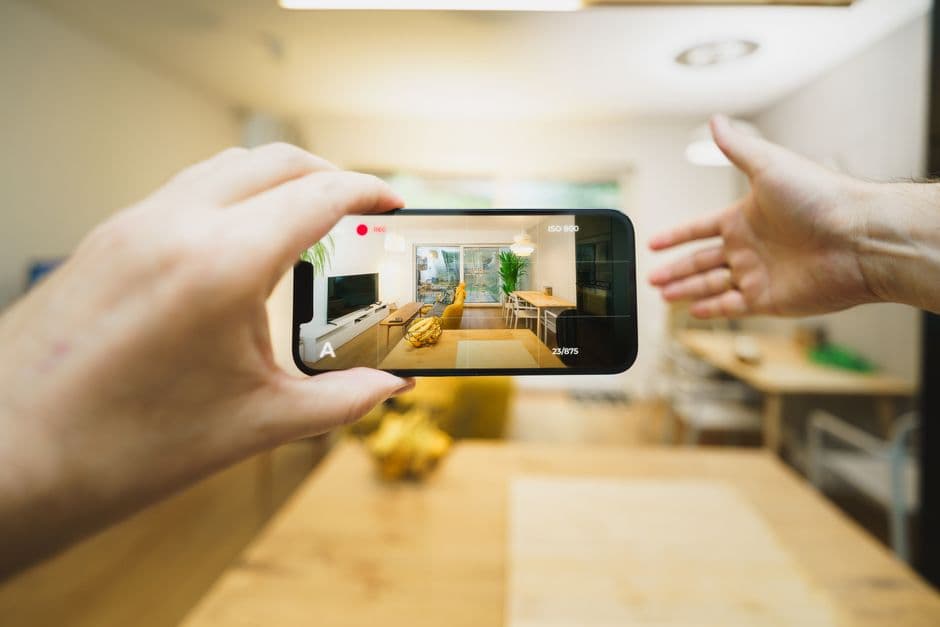
- Shoot the same angles of key rooms and furniture before every stay, so a damage photo has a real baseline to compare against.
- Shoot again right after checkout, before cleaning starts, because once the room is cleaned the scene is gone.
- Keep the original files exactly as your phone or camera saved them, and back them up somewhere other than the device. A screenshot or a resaved copy is harder to stand behind later.
- Keep damage photos out of retouching, object removal, brightening, and filter apps, even for harmless changes. Once a file has passed through an editor, it is hard to show afterward which changes were cosmetic.
- Shoot wide to show the room, then close up to show the damage.
- Keep receipts and repair estimates as the original documents you received, since a typed-up summary gives Airbnb nothing to verify.
- Keep the damaged item until the claim is resolved, in case Airbnb asks to see it.
Are Airbnb damage claims reviewed automatically?
Sometimes. Airbnb's help page on Host Damage Protection says some requests "may be expedited and reviewed automatically without a person reviewing it first." If you don't accept the result, you can request human review and share more evidence or context. If an automatic decision doesn't match what you submitted, ask for that review.
The Manhattan case never settled what happened to that coffee table. Nobody proved the table was undamaged, and nobody proved the photos were doctored. Airbnb reversed the charge and, according to the reporting, told the host it could not verify his images. Every host's claim is now judged against that written verification standard, whether or not the dispute ever makes the newspaper.
This is general information, not legal advice. Airbnb's terms change (the current version is dated August 1, 2026), so check the Host Damage Protection Terms in your account before relying on any deadline or requirement here.